Battle of Mandavgad
A Kingdom of Terror
Mandavgad — A Kingdom
Held Hostage by Darkness
Mandavgad was a fortified village in Dhar District, Madhya Pradesh — spanning 70 km across 12 surrounding villages. Its ruling king had turned it into a place of terror through black magic, idol worship, and daily human sacrifice.
For several years, Sultan Mehmood Begda of Gujarat sent army after army — eventually 12,000 soldiers — but none could breach the fort. The king’s dark spiritual protection made him seem invincible. Until one name was spoken.
The suffering of thousands of ordinary people — enslaved, killed daily, and living in terror — had gone unanswered for too long. It was a situation that required not just a general, but a divine instrument. And in the village of Unava, Gujarat, such an instrument was being prepared — though he was only 18 years old, and on the eve of his own wedding.
King Mehandiraj of Mandavgad
A Man Who Used Darkness to
Hold an Entire Kingdom in Fear
The king of Mandavgad — known as Mehandiraj — was not merely a cruel ruler.
His atrocities were multiple, compounding, and deeply spiritual in their evil.
A giant idol at the centre of the fort — the vessel of all his dark power — fed with the blood of a different person every single day.
Every day without exception, one imprisoned person was killed. Their blood used to apply a Tilak mark on the idol — and on the king's own forehead.
He surrounded himself with Tantriks and dark practitioners. His life-force was bound into his choti (hair lock) — making him appear indestructible.
He forced subjects to worship him as a divine being. Those who refused were imprisoned or sacrificed. Thousands lived in total fear.
The Call
How the Cry Reached
Unava — and One 18-Year-Old
One day, a wise man from Mandavgad managed to escape from the tyrant’s kingdom and made his way to Delhi, where Muhammad Lodhi sat on the throne. With great urgency, he described the situation in Mandavgad — the 70-km kingdom, the 12 surrounding villages, the daily killings, the giant idol, the enslaved people, the dark arts. He begged for help.
A wise man escaped Mandavgad and reached Delhi, then Ahmedabad. Sultan Mehmood Begda sent 12,000 soldiers — all failed. In despair, someone in his court remembered a name: Saiyed Ilmuddin’s grandson, Saiyed Ali of Unava.
The king sent an urgent message south. But when it arrived in Unava — preparations for Saiyed Ali’s own wedding were already underway. He was just 18 years old.
Without hesitation and without complaint, he left his wedding preparations and answered the call. He chose the oppressed over his own celebration.
The Departure
He Knew He Was Not Coming Back
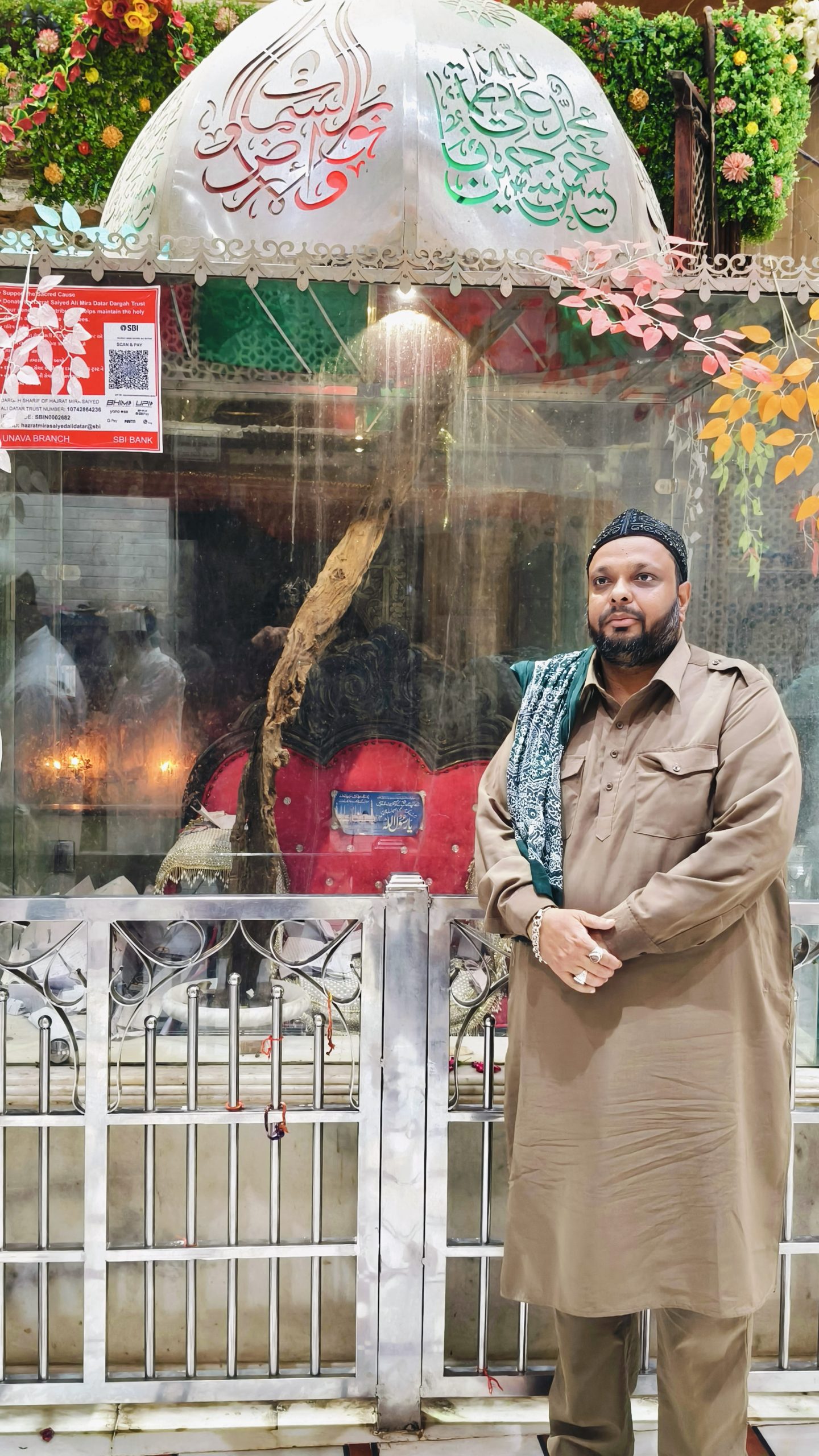
Before leaving Unava, Saiyed Ali planted a small Miswak twig in the ground. He told those gathered around him something they would never forget:
If I am martyred at Mandavgad, bury me on this very spot. And the day I am martyred — this small Miswak will become a great Miswak Tree Spoken before departing for Battle · Hazrat Saiyed Ali Mira Datar (R.A.)
He then performed Wazu, prayed to Allah, and set out — not with the weight of a man walking to his death, but with the serenity of one walking toward his lifelong prayer. He had always wanted to die as a martyr, in the footsteps of Imam Hussain (R.A.). Mandavgad was his Karbala.
The Battle
125 Men. 18-Foot Walls.
Three Miracles Before the Fight
The battle Saiyed Ali fought was not primarily a military campaign.
It was a spiritual one — and the miracles began before the first sword was raised.
The Shahadat & After Battle
He Was Beheaded — And Still He Won
The tyrant’s sword ended his life — but not his mission. In martyrdom, his spirit completed the work, severing the choti that held the king’s dark power. The fort fell. The innocents were freed. A poet named him forever: “As he generously gave his life to save thousands of innocent people, a famous poet gave him the title Mira — brave — and Datar — the one who gives.”
After the battle, no one knew where the body lay. The saint appeared in the dream of his grandfather Saiyed Ilmuddin — announcing victory, revealing the location (Lohani Caves), and giving exact instructions for his burial in Unava.
At the Lohani Caves, his Red Horse stood guard and led the grandfather directly to the body. When they found him, his body was completely covered in fresh flowers that no human hand had placed — a divine sign of his blessed station.
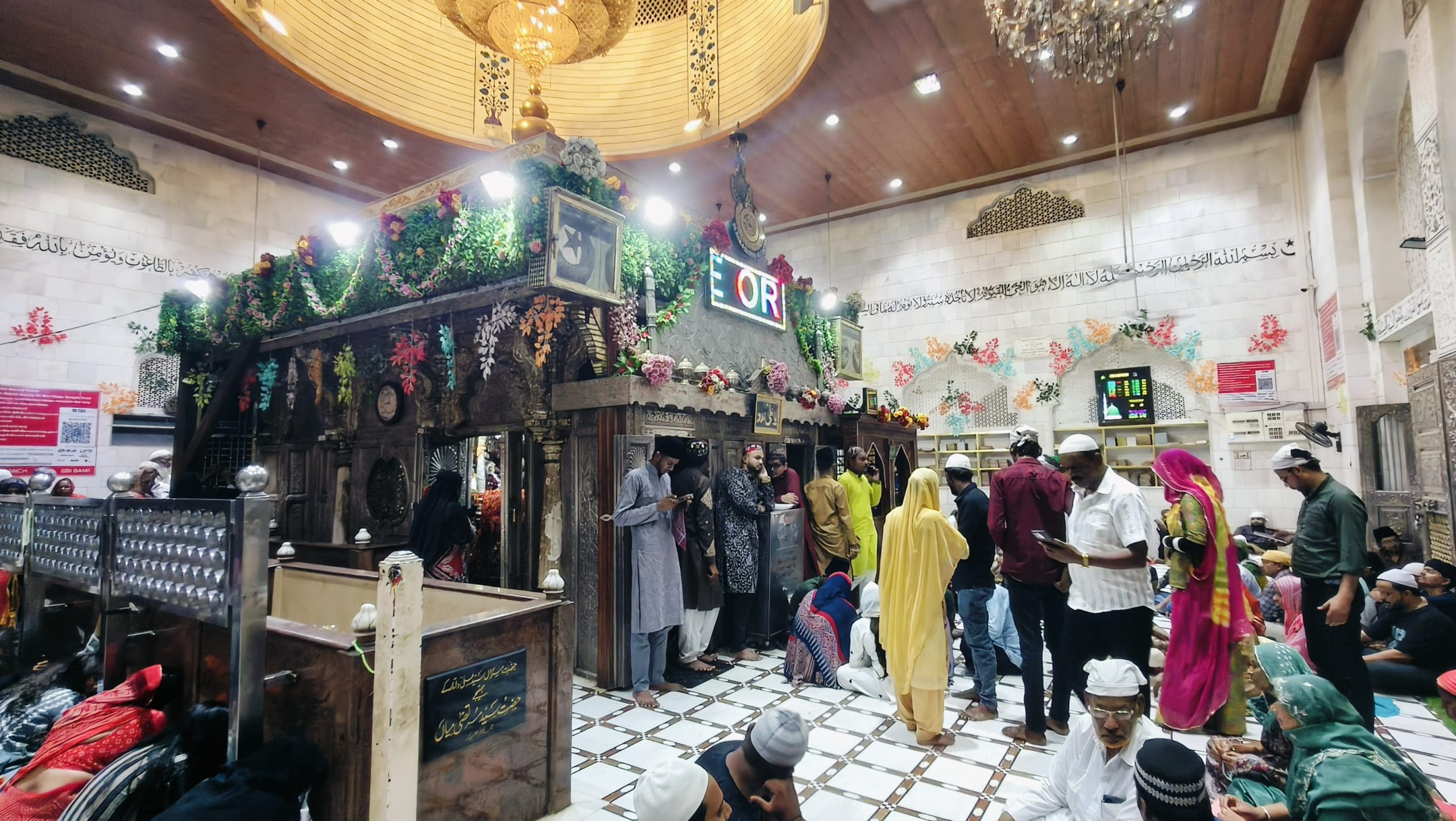
The body was placed on a She-camel and carried toward Unava. At one specific spot, the camel refused to move an inch despite every effort. That spot — chosen by divine will, not human choice — became the Mazar Sharif at Unava Sharif, where he rests today.