Hitsory
Chapter I
The Sacred Origins — Bukhara to Gujarat
Who Was He
Born Into Light — A Life of Divine Purpose
Hazrat Saiyed Ali Mira Datar was born on the night of the Eid moon — 29th Ramzan 879 Hijri, 4th August 1426 CE — in Saiyedwada, Ahmedabad. His lineage traces directly to Hazrat Imam Hussain (R.A.), grandson of the Prophet Muhammad (S.A.W.), through a noble family that had journeyed from Bukhara, Uzbekistan.
From childhood he was known as a wali — a friend of Allah. He devoted every hour to ibaadat, to deep study of Hadees and Sunnah, and to helping all who came to him in difficulty. No problem was too great, no person turned away.
From Bukhara to Lucknow
Hazrat Saiyed Ilmuddin arrived with his father from Bukhara, Uzbekistan — one of the great centres of Islamic civilisation — and settled in a village near Lucknow, India. During this era, many learned preachers (Buzurgs) made the same journey to guide Muslims back to the path of righteousness. His uncle, Hazrat Kutbe Alam, had already been sent ahead to Gujarat by the family.
The Commander of Ahmed Shah
After the death of his father, Saiyed Ilmuddin travelled to Ahmedabad, Gujarat. There, his uncle Kutbe Alam was greatly pleased to see him and introduced him to the King of Ahmedabad — Sultan Ahmed Shah. Impressed by his piety and stature, the Sultan recruited Saiyed Ilmuddin into his army at the post of Commander in Chief (Sipesalar). Under his leadership, so many soldiers became disciples (Mureed) and were guided toward the rightful path of Allah.
The Noble Parents
Saiyed Ilmuddin’s son, Saiyed Dost Muhammad (also known as Dosumiya), became a commander in the army of Sultan Ahmed Shah — founder of Ahmedabad. He married Saiyeda Ayesha Bibi, known as Jannati Maa or Rasti Amma — the sister of Sabe Burhani. From this noble union, Hazrat Saiyed Ali Mira Datar would be born into a family of warriors, scholars, and saints.
The Hussaini Lineage
The family belongs to the Husaini Saadat — direct descendants of Hazrat Imam Hussain (R.A.), the grandson of the Prophet Muhammad (S.A.W.) and son of Hazrat Maula Ali (R.A.). This lineage carries with it the spiritual light and divine station of the Ahlul Bayt — the household of the Prophet. Saiyed Ali would embody this legacy fully, in both his life and his martyrdom.
Chapter II
The Birth — A Child of Divine Light
The Birth of a Wali
Born on the Moon Night — A Face Full of Noor
In the blessed month of Ramzan, in the year 879 Hijri — on the holy night of the Eid moon, 29th Ramzan — Hazrat Saiyed Ali Mira Datar was born in Saiyedwada, Ahmedabad. It was a Sunday, the 4th of August, 1426 CE. The moment he entered the world, those present witnessed something extraordinary: his face glittered with spiritual lightning — the Noor of divine grace. He was recognised from birth as a Wali — a friend of Allah.
He was born into nobility on all sides. His father Saiyed Dost Muhammad was a military commander. His mother Jannati Maa was a woman of deep piety. And his entire family carried the sacred Hussaini lineage — a chain of blessed souls tracing back to the Prophet himself. Yet from his very first breath, Saiyed Ali showed signs that he was destined for something far beyond even this exalted heritage.
Chapter III
The Spiritual Life — A Friend of Allah
His Character & Gifts
A Soul Dedicated to Allah
and to Mankind
From childhood, Hazrat Saiyed Ali Mira Datar displayed an extraordinary character — one that combined deep spiritual devotion with a fierce love for Imam Hussain (R.A.) and an unwavering desire for Shahadat (martyrdom in the way of Allah). He never sought worldly comforts or status. His every speech and action was aligned with the pleasure of Allah and the preaching of Prophet Muhammad (S.A.W.).
He was a great lover and cherisher of Hazrat Imam Hussain (R.A.) and always yearned to follow in his footsteps — to give his life in the way of truth and justice, as the Imam had done at Karbala. This was not merely an aspiration. It was a divine prophecy that would come to pass.
It is narrated that from his birth itself, Hazrat Muhammad (S.A.W.) had gifted Mira Datar a boon — the Power of Healing — to eradicate the forces of evil and black magic in the entire universe. This divine gift, passed through the chain of Ahlul Bayt, made him one of the most powerful spiritual healers the subcontinent has ever known.
Whoever brought any difficulty to Saiyed Ali, he solved it immediately. His prayers were accepted by Allah at once — something witnessed repeatedly by those around him.
His speech and presence were so profoundly divine that many people accepted Islam simply by witnessing his character, his prayers, and the light that radiated from him.
From birth, a divine boon of healing was bestowed upon him — the power to eradicate evil forces, black magic, and spiritual afflictions from all who sought his intercession.
Chapter IV
The Shahadat — Martyrdom at Mandavgad
The Martyrdom
A Young Warrior’s Ultimate Sacrifice
At the age of approximately eighteen, when wedding preparations were being made for Saiyed Ali in Unava, the call came from King Mehmood Begda. The fort of Mandavgad in Madhya Pradesh had resisted conquest for years. The tyrant ruler there was terrorising thousands of people — killing them to appease a giant idol, practicing black magic, and enslaving the innocent.
Someone in the king’s court said that there is a person named Saiyed Ilmuddin whose grandson, Saiyed Ali, is the only one who can win this fort. The king sent word to Unava. Without hesitation, Saiyed Ali left his own wedding and rode to Mandavgad with only 125 soldiers.
Chapter V
The Miracles — Power That Did Not End with Life
Karamat — Divine Miracles
His Noor Has Never Ceased to Heal
Before leaving for Mandavgad, he planted a small miswak twig and said: "When I am martyred, this will become a great tree." When the news of his shahadat arrived, the small twig had transformed into a full Miswak tree — exactly as he foretold.
On the night before the battle, a furious storm blew through the army camp and destroyed all tents — except the one where Saiyed Ali sat reading the Quran with his grandfather. Witnessing this, King Mehmood Begda knew with certainty that Saiyed Ali was a true Wali of Allah.
On the way to Mandavgad, Saiyed Ali and his 125 soldiers faced a river blocking their path. cust-introaculously, the river parted and gave them passage — allowing them to reach the fort of Mandavgad to fulfil their divine mission.
The fort of Mandavgad had 18-foot-high walls. Saiyed Ali prayed to Allah, and his horse leapt the entire height — carrying him over the walls and into the fort. It is said the hoof prints of that cust-introaculous leap remain in the stone of the fort to this day.
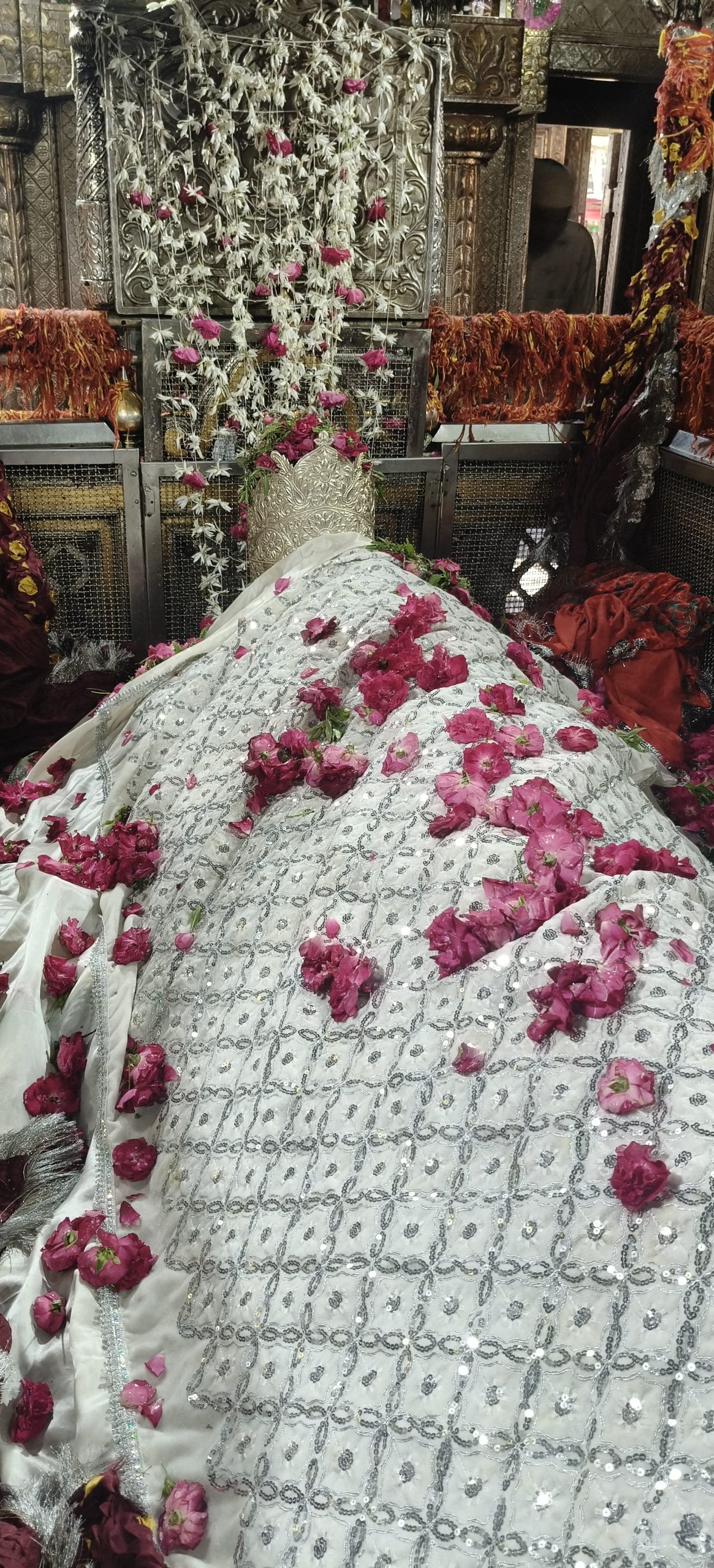
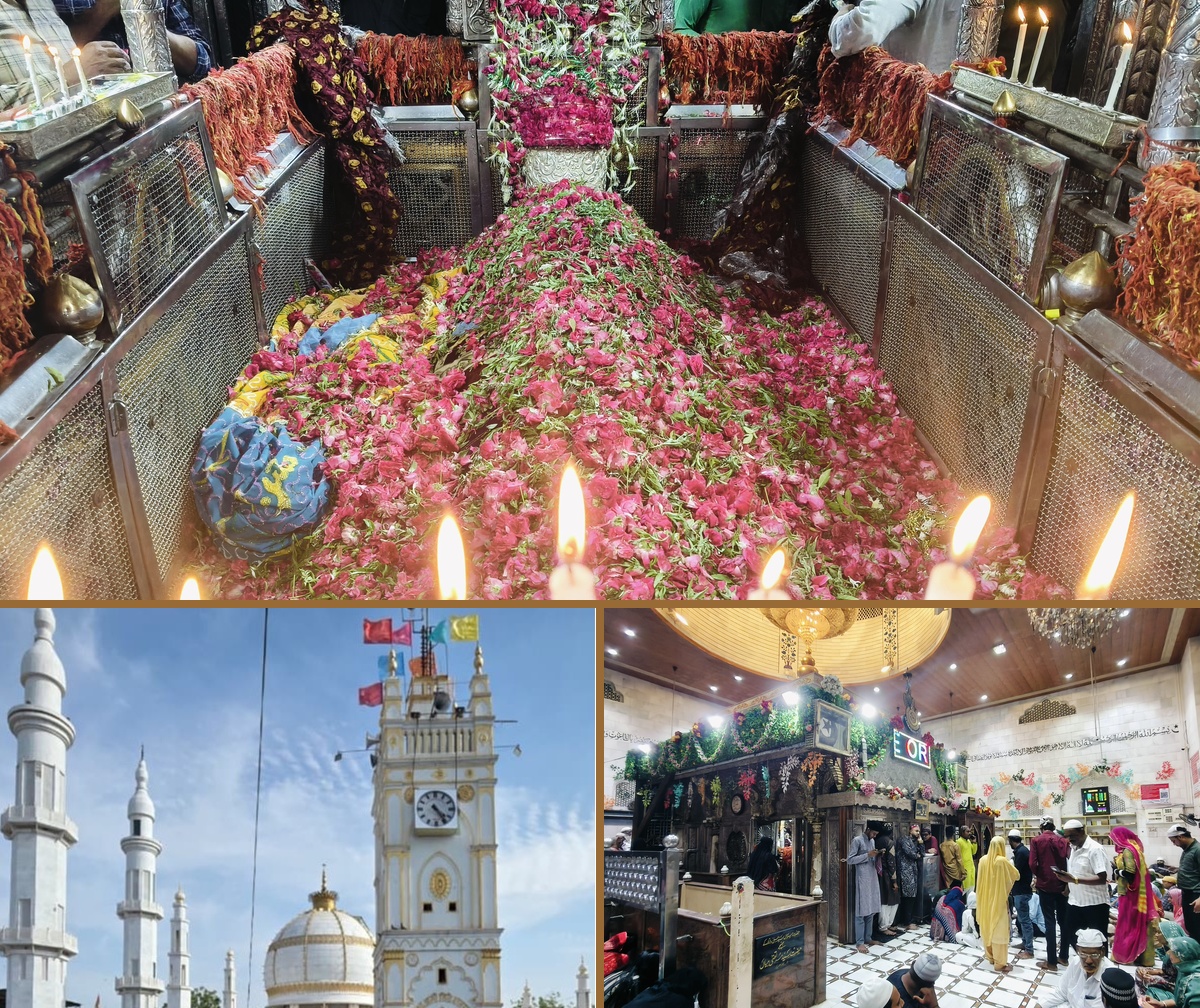
When Saiyed Ilmuddin and King Mehmood Begda found the body in Lohani Caves, they were astonished to see it completely covered in fresh flowers. No human had placed them. This cust-introacle revealed to all that the saint had been received in divine honour, even in death.
When the saint's body was being transported to Unava, a camel cust-introaculously refused to move at one particular spot. It would not be made to move. That spot became the site of the Mazar Sharif — chosen not by man, but by divine will — where he rests to this day.